
Reviews
Jerry's Escape Room Puzzles succeeds where many puzzle games fail: it makes thinking fun without frustration. The rooms are compact but packed with interactive elements that reward careful observation. Adventure mode allows children to learn at their own speed, while Time Trial mode adds replay value for adults. The cheerful art and absence of any scary or violent content make it a safe choice for family game time. A solid puzzle experience that respects the player's intelligence.
About this game
Room-by-Room Challenges
Each level presents a new enclosed space filled with interactive items. Players examine the layout, identify which objects can be pushed, pulled, or triggered, and then plan a sequence of actions. The goal is straightforward: clear a route for Jerry to reach the door. But the path is never obvious. Levers might raise platforms, buttons could open hidden passages, and movable blocks may bridge gaps. Success depends on observing cause and effect.
Two Ways to Play
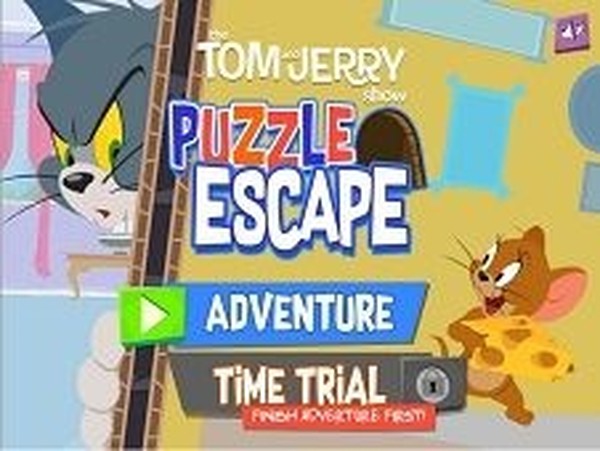
Adventure mode lets players solve puzzles at their own pace. There is no timer, no pressure. This mode suits younger players or anyone who enjoys careful reasoning. Time Trial mode introduces a countdown clock for those who want to test their speed. The same puzzles appear in both modes, but the timer changes the strategy. Quick thinking becomes as important as accuracy.
Visual Style and Tone
The art style draws from the classic cartoon aesthetic. Characters and environments are colorful and expressive without being cluttered. Animations are smooth and playful. Tom the cat appears occasionally, but the game handles these moments with lighthearted humor rather than tension. The overall mood stays cheerful and inviting, which makes the game suitable for shared family play.
Accessible Controls
Players interact with the game using simple touch or mouse gestures. Tapping on objects activates them. Dragging moves items across the screen. Swiping can trigger certain mechanisms. The control scheme is intuitive enough for young children to grasp quickly, yet the puzzles themselves offer enough depth to engage older players. This balance between simple input and complex output is a hallmark of well-designed puzzle games.
Learning Through Play
Each puzzle teaches a small lesson in logic. Players learn to sequence actions, recognize patterns, and adjust their plans when something doesn't work. The game never lectures. It simply presents a problem and lets the player experiment. This hands-on approach builds cognitive skills naturally. Parents may notice their children becoming more methodical and patient as they progress through the rooms.











Comments
Sign in to leave a review
No account? Create one
No comments yet.